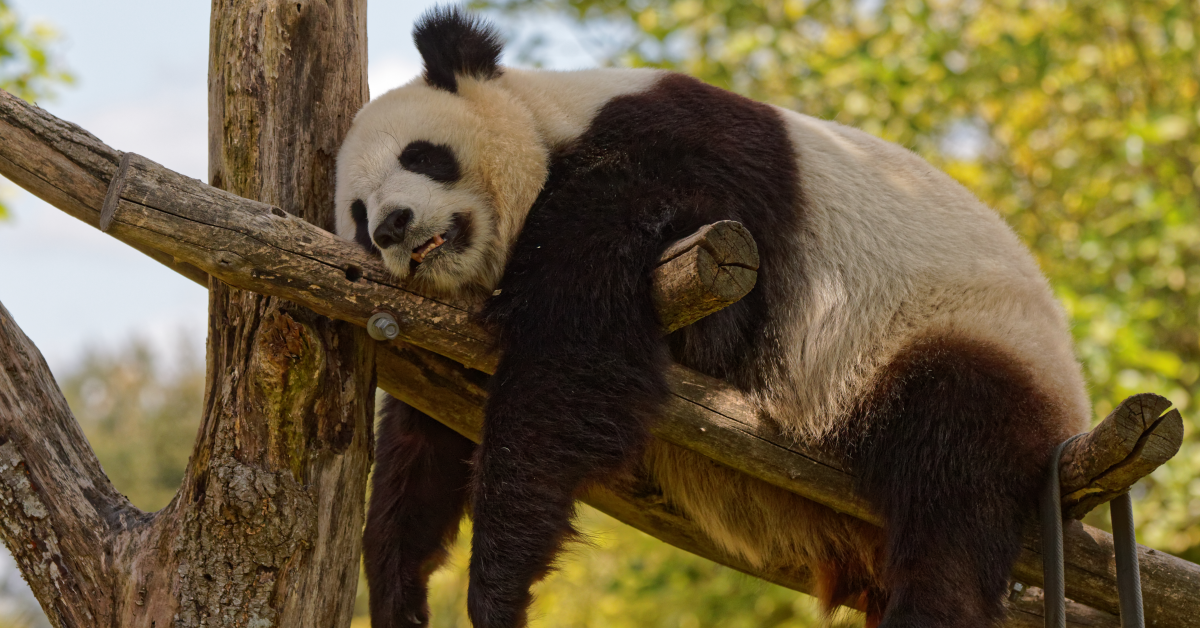
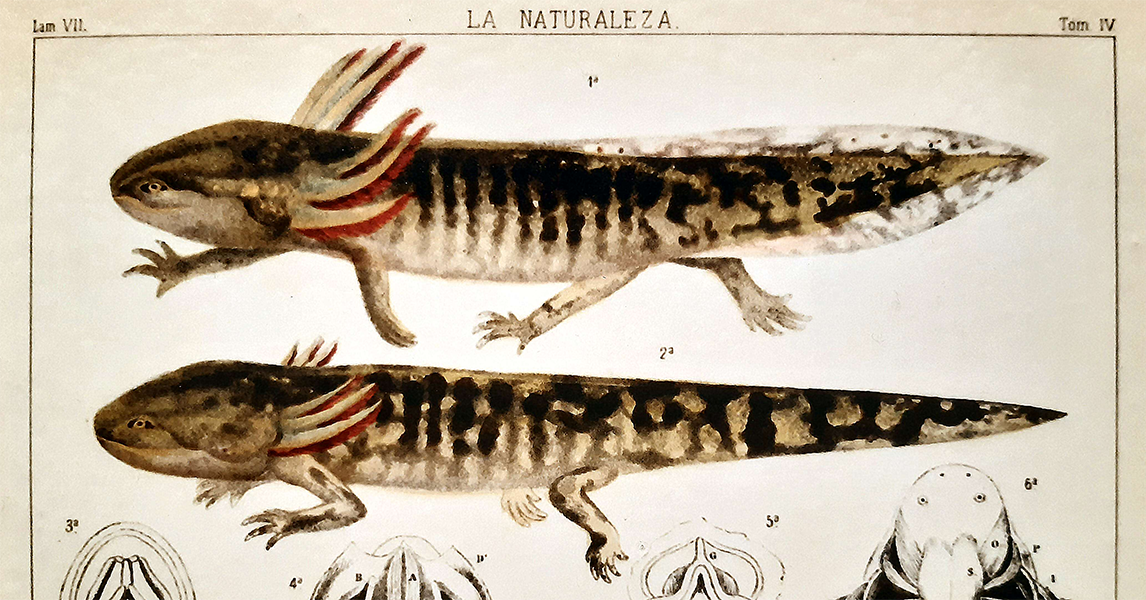
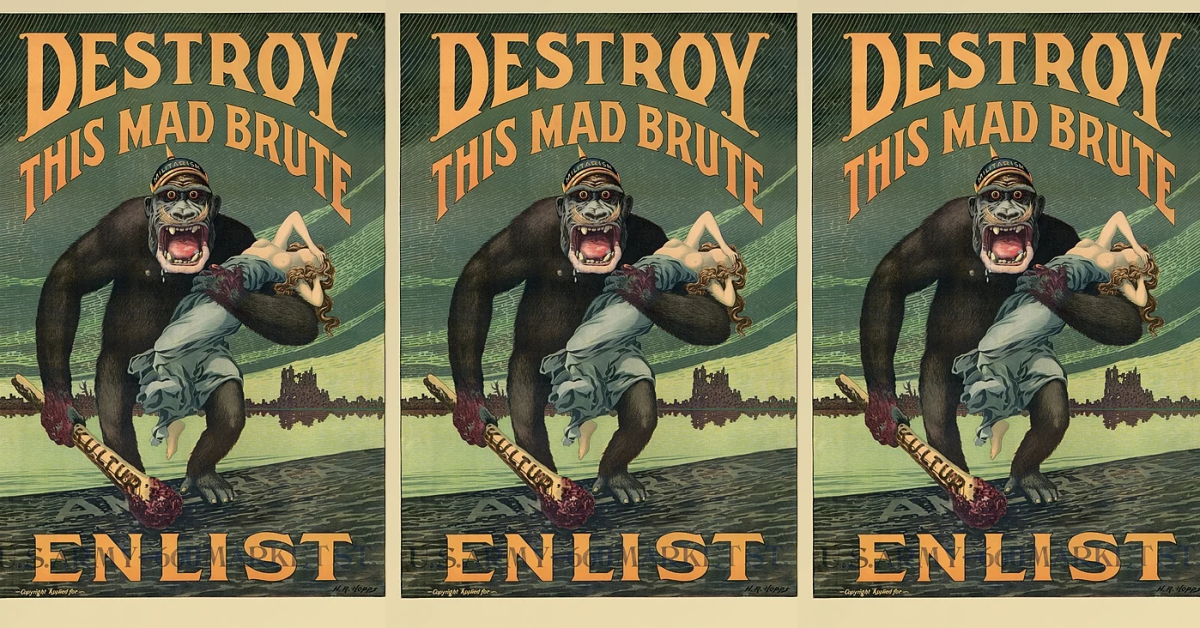
The arguments haunt me. “The world’s most useless creatures.”1 “Cute but useless”2. “Why do pandas suck at surviving?”3. “Pandas suck and we should stop trying to conserve them.”4. “Pandas are useless and humans should not help them stay alive.”5
What did the pandas do to us? Not since the mosquito, nature’s bioterrorist, have I seen so much distinct and prolonged vitriol for one of our fellow creatures.
Articles of equal popularity written decades apart espouse the same view: pandas are bad at surviving and deserve to die.
Pick any three and you’ll understand the argument quickly enough. If you’ve been on the Internet for longer than a year, chances are you’ve heard it already.
The case against the giant panda
First: pandas are awful eaters. Despite being most closely related to omnivorous fellow bears like the black, brown, and sun bear, and having a digestive system comparable to those cousins in its calibration for a varied diet of both meat and veggies, the giant panda eschews all complexity and fills 95% of its diet with one food: bamboo.
Technically a grass, bamboo is among the world’s quickest growing plants but it’s not particularly dense in nutrients. Giant pandas spend between 12 and 14 hours a day eating between 80 and 100 pounds of bamboo, and the end result is that they’re still pretty lethargic creatures. Their paws have evolved a bonus thumb-like wrist digit to help them grasp this incredibly specific food choice, but their digestive systems have lagged somewhat in optimizing for it.
Second: reproduction. While other bears have breeding seasons that last two or three months, the female giant panda is receptive to fertilization for just two or three days. Being solitary creatures that prefer keeping large swathes of territory to themselves, successful panda reproduction is an extremely “right place, right time” affair. Miss this tight window and they’ll have to wait until next year.
But even if they make that window, they’re not out of the semi-proverbial bamboo forest yet: about half of panda pregnancies result in twin births, but, of these two, only one has a chance at survival. Shortly after experiencing the miracle of life, mother pandas select one of the two twins to raise and abandon the other to die. It’s not (just) casual disregard for life. Being mammals, pandas rear their young on milk, and the restrictive bamboo diet doesn’t provide these panda moms with enough fat to successfully feed more than one cub at a time. The dads are no help either, fucking off shortly after fucking down, and playing no role in raising one, let alone two cubs.
Considering all of this, it feels like pandas have only one thing going for them: their identity. Emblematic icons representing both the World Wildlife Fund and China as a whole (a big get), pandas are renowned for their adorable nature, sneezing and tumbling into the hearts of their unlikely human allies.
As an aside, there’s also the matter of their name. Named the giant panda, you could be forgiven for imagining there is or was some other size of panda. You wouldn’t be entirely wrong, of course: the label does exist to separate the giant panda from another animal, the red panda.
I have to disclose my bias here: red pandas are my favorite and I think they’re the best. Yeah, sure, the giant panda is cute, but compared to these guys? No contest. But if we set that bias aside for a moment, it’s worth asking why these guys get to share the name “panda”. They’re not closely related to the giant panda; they’re not even bears to begin with.
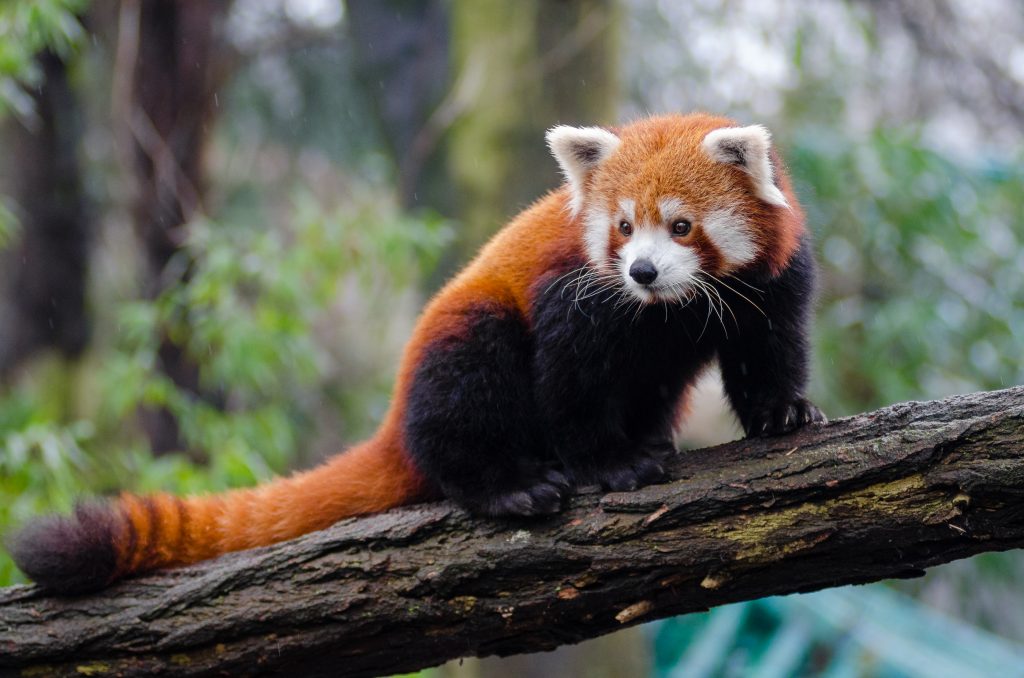
They do share some key similarities revolving around their chosen diets: red pandas, like their significantly larger, ursine pseudo-cousins, subsist primarily on a diet of bamboo. They’ve evolved a similar thumb-like digit on their paws to hold the stuff, and they’ve evolved toward this abundant grass in the same direction, also having digestive systems better befitting a carnivore (herbivores tend to have longer digestive systems to squeeze out and take in plant nutrients, while carnivores like to keep it simple).

So because of this, we’re inclined to ask, the red panda gets to swipe the name of its more massive neighbor?
Actually, it’s the other way around. Despite being the larger, more internationally well-known of the two species, the giant panda stole its name from its smaller, more arboreal adoptive cousin.
We can’t be certain exactly where the English word panda comes from (one solid candidate is the Nepali word “ponya”, which might refer to that funky bamboo thumb), but either way, its first use in referring to the red panda predates its application to the giant panda by at least forty years.
That’s English, but surely the Chinese languages must supply a different story, the giant panda being that country’s national animal and key diplomatic token.
We’d think so, but we’d be wrong.
To be fair, Mandarin Chinese has plenty of words for the giant panda, several going back centuries, if not millennia. But the most common name used for the animal today is “dàxióngmāo” — translated directly, “giant bear cat”. Sometimes it’s just “xióngmāo”, or “bear cat”. Their “giant” was applied for the same reason as ours, to separate it from, you guessed it, the red panda, the original holder of that name and an animal that, despite not at all being a bear, does resemble a cat much more closely than the massive and round giant panda.
So, really, the giant panda can’t even be proud of its name. Maybe it’s time to admit it: this animal is an all around failure, and it’s only because of human intervention that it’s even alive.
Am I going insane? Are we going insane? That’s fucking crazy.
The case for the giant panda
The giant panda is nothing without humans. It’s due to our compassionate assistance that it continues to lead its fucked up failure life. Right?
But humans have been around for approximately three hundred thousand years, civilized (insofar as we were building civilizations), for fewer than ten thousand, and operating in any capacity to be able to help any non-domesticated animal for thousands of years shorter than that.
The giant panda (or, at least, an ancestor), by comparison, seems to have evolved toward its all-bamboo diet at least two million years ago. There’s decent evidence that pandas have been eating bamboo for longer than more iconic and lauded predators like lions have been ruling their domains. In other words, bamboo specialization as a handicap looks like a modern interpretation of a long and storied evolutionary path.
In fact, pandas are far from alone in their restrictive eating habits. In Australia, the koala (like the original bear cat, also not a bear) survives mostly on eucalyptus leaves and, owing to the limited nutritional quality of this particular feed, spends around twenty hours a day asleep. To be fair, though, if giant pandas are the species most popularly labeled genetic failures, koalas are an easy number two. That at least around half of all koalas (and more than 90% in some mainland populations) have chlamydia doesn’t really have space in this article but feels like it can’t go without mentioning.
Either way, these two supposed fuck-ups are far from alone. Many Canada lynx feed almost entirely on snowshoe hare. Black-footed ferrets rely almost exclusively on prairie dogs, with some eating more than one hundred prairie dogs in a single year.
Monarch butterfly caterpillars only eat milkweed leaves. Most lice are entirely dependent on the specific species whose hair they inhabit.
The green-banded broodsac, a parasitic flatworm, lives an insanely specific (and disgusting) life, sneaking inside the bodies of snails and dancing (pulsating, technically) inside of their eyestalks (for real) in an effort to trick birds into thinking they’re caterpillars and to eat the eyestalks. Once safe inside the bird, the freak worm lays its eggs in the avian’s digestive system, leaving them to be defecated out and eaten by a new generation of poor snails. That’s such a specific sequence of events, and yet, it happens and has happened for long enough for the species to survive.
And the “twelve hours a day eating” thing? Sure, it sounds extreme; other bear species tend to spend significantly less time with their more varied diets, but that comes with an important exception: giant pandas don’t hibernate. Their twelve hour-a-day diet is a year-round affair. By contrast, hibernating species eat significantly less for much of the year, but many end up spending more time eating than their panda cousins do in the lead-up to hibernation. There’s a reason fat bear week is a fêted affair.
Far beyond ursidae, the African lion is one of the world’s best-known generalist carnivores, surviving exclusively on meat but not particularly caring where that meat comes from. Lions don’t spend very much time at all hunting and ingesting prey, preferring to do so in short bursts, but outside of hunting, they spend the vast majority of their time, upwards of twenty hours a day, sleeping.
All of these species, despite their quirks and niches, survive. And so, so far, has the panda. With numbers hovering in the single-digit thousands, it may look like they’re not surviving well, but they’re making out better than celebrated species like the saber-toothed cats, woolly mammoths (a species some scientists are focused on bringing back), and, of course, the Tyrannosaurus rex. These guys all lost their battles with nature. The giant panda is still kicking.
Sure, it’s struggling, but that, like almost every ecological disaster in the Anthropocene, is largely our fault. Left to their own devices, pandas do just fine. Start cutting down their bamboo forests (forests have been on the upswing in China over the past couple of decades but remain fragmented) and they start to suffer in the same way any species robbed of its habitat will suffer.
Even our compassionate action has its limits. Conservation efforts have seen significant numbers of pandas funneled into zoos where they survive but have even more trouble reproducing than they do in the wild. That’s far from unique to pandas. Even the great white shark, the much-lauded king of the open ocean, stresses itself to death within days of being introduced to an aquarium.
The giant panda isn’t bad at surviving. Compared to the untold millions of species who have fallen before it, it’s actually doing pretty well. Really, the most significant factor in the panda’s decline over the past several centuries isn’t its love for bamboo or its lack of love for its young; it’s us. Humans are the ones restricting the panda’s environment and expecting them to fuck more frequently under the watchful eyes of zoogoers (who may or may not be able to tell them apart from painted bears or dogs). The crime pandas are guilty of isn’t failing to survive, it’s failing to live up to our standards.
In other words, attacking pandas for their declining population isn’t a hard-but-fair laying out of the facts; it’s victim blaming.
Read More
- Bears and Bamboo: The fossil record of giant pandas by Riley Black for National Geographic
- Picky Eaters of the Animal Kingdom from the U.S. Fish and Wildlife Service
- Generalist and Specialist Species from National Geographic
- To Keep the National Zoo’s Pandas Satisfied, Staff Prepare an Endless Supply of Bamboo from the Smithsonian National Zoo & Conservation Biology Institute
Images
- Zooparc de Beauval – Panda – 2016 – 012.jpg by Wikipedia user thesupermat
- Licensed under the Creative Commons Attribution-Share Alike 4.0 International license
- Red Panda (24986761703).jpg by Flickr user Mathias Appel
- Licensed under the Creative Commons CC0 1.0 Universal Public Domain Dedication

.jpg)